
What Safety Standards Should Your Loft Ladder Meet?
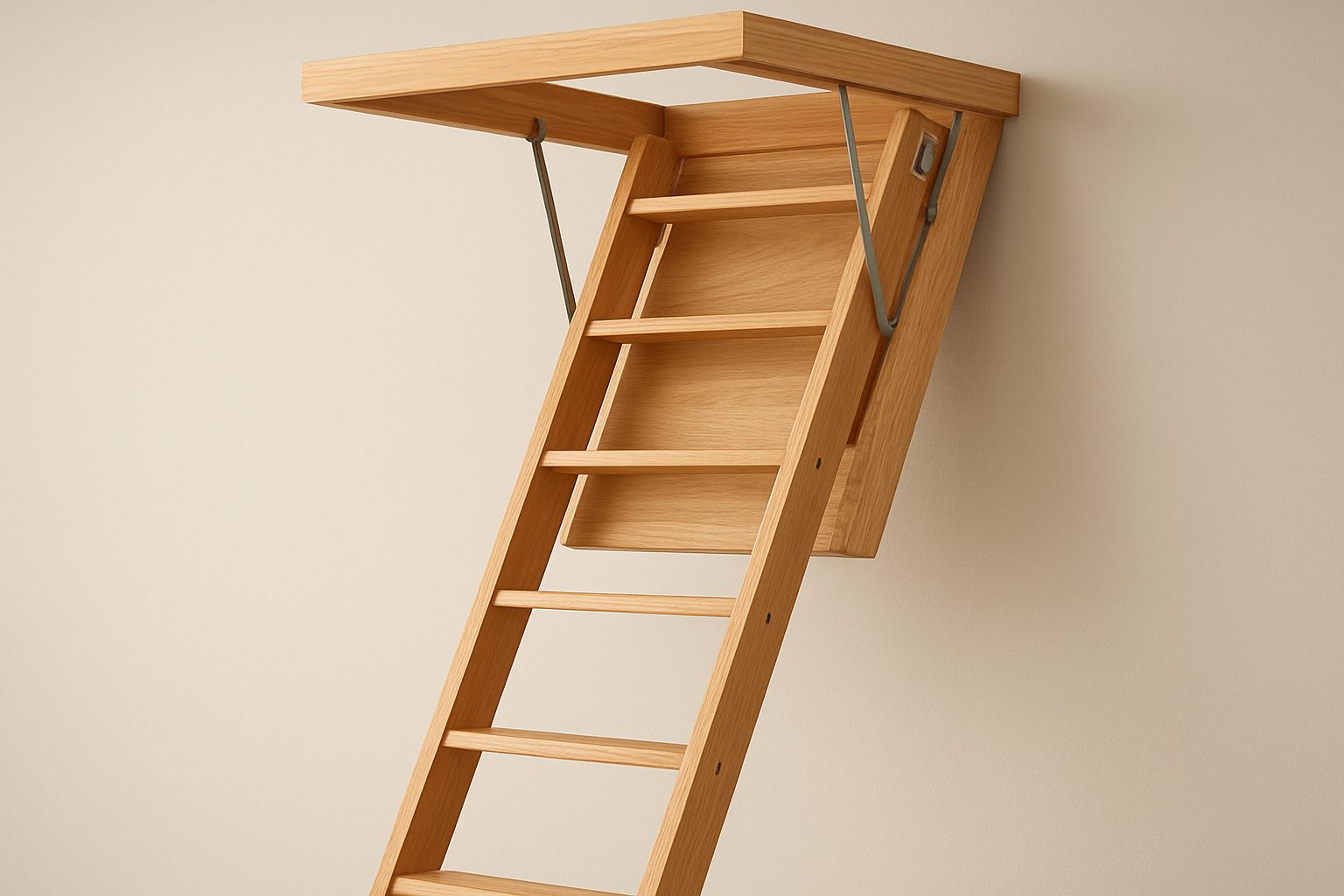
Buying a loft ladder without checking its safety certification is one of the most common and avoidable mistakes homeowners make. Here is what the standards actually require—and why they matter.
The Standard That Governs Loft Ladder Safety
BS EN 14975:2006 is the primary European standard for loft ladder design, manufacture, and performance. It covers load-bearing capacity, tread geometry, handrail requirements, and hatch integration.
Any loft ladder sold for residential use in the UK should comply with this standard. Products that do not carry this certification have not been independently tested to the required thresholds.
What Does BS EN 14975:2006 Actually Require?
The standard specifies minimum performance criteria across several categories:
Load capacity: Minimum static load of 150kg, with proof load testing at 1.5x the rated capacity
Tread depth: Minimum 60mm measured horizontally
Tread width: Minimum 300mm
Pitch angle: Between 59° and 75° from horizontal
Handrail height: Minimum 900mm when measured vertically from the tread
Deflection limits: Maximum allowable flex under load to prevent structural failure during use
Both wooden loft ladder and aluminium models are tested against these criteria—certification is material-agnostic.
How Do Wooden and Aluminium Ladders Perform Against These Requirements?
Aluminium ladders, due to their uniform manufacturing process, typically exceed the minimum load capacity requirements. Many commercial models are rated to 200kg.
Wooden ladders, when constructed from hardwood, also meet or exceed the standard—but the margin depends heavily on wood species and joint construction. A poorly constructed softwood model may only just meet the minimum threshold.
Practical takeaway: Always check the specific load rating of the product, not just whether it carries the BS EN 14975:2006 mark.
Frequently Asked Questions About Loft Ladder Safety
What happens if my loft ladder is not certified?
Using a non-certified ladder does not carry an automatic legal penalty for homeowners. However, it may void your home insurance in the event of a fall-related injury claim, and it provides no assurance of independent safety testing.
Are there additional regulations for loft conversions?
Yes. If your loft has been converted into a habitable room, the access staircase must comply with Building Regulations Approved Document K. This imposes stricter requirements on pitch, tread depth, and handrail configuration than BS EN 14975:2006 alone.
What is the maximum safe pitch angle for a loft ladder?
BS EN 14975:2006 permits angles up to 75° from horizontal. Beyond this, safe foot placement becomes compromised, particularly when descending while carrying a load.
How do I verify that a product meets BS EN 14975:2006?
The certification mark should appear on the product label, in the instruction manual, and in the online product specification. If it is not listed, contact the manufacturer directly for confirmation.
Should children use loft ladders unsupervised?
No. Regardless of material or certification, loft ladders are not designed for unsupervised use by children. A lockable hatch mechanism is strongly recommended in households with young children.
How often should a certified loft ladder be inspected?
Annual inspection is recommended. Check all hinges, pivot points, fixings, and tread surfaces. Replace any components showing signs of wear, corrosion, or cracking immediately.
Safety Is Not Optional
A loft ladder is used under gravity, often while carrying loads, in a space with limited headroom. The consequences of structural failure are serious.
Certification is not a bureaucratic formality—it is the only objective evidence that a product has been tested to perform safely under real-world conditions. Treat it as a non-negotiable purchasing criterion.